

Trappist beers, ancestral expertise
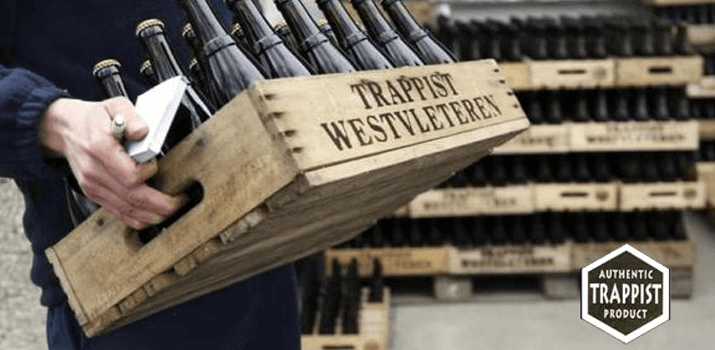
You never really feel guilty enjoying a Trappist beer—and for good reason. All profits either support charitable causes or go towards maintaining the monasteries. Yes, you really can help others by drinking beer.
A true benchmark in the world of craft beer, Trappist beers are masterpieces that never fail to impress. Earning the Trappist certification is no small feat: the beer must be brewed by monks or under their direct supervision, within the monastery itself. Additionally, all profits must be used for monastery upkeep or donated to charity. (In case you’re wondering—no, it’s not tax deductible.)
This week, as we celebrate Trappist beers, we’re sharing our Top 5 Trappist beers you need to try.
1. Westmalle Tripel – The Mother of Tripels
Known as the first beer of its kind, Westmalle Tripel is widely considered the Mother of all Tripels. First brewed in 1934 with meticulously selected ingredients, its signature yeast strain has remained unchanged since 1956, giving the beer remarkable aromatic and flavor complexity. Pouring a golden yellow color with a flurry of fine bubbles and a thick, airy white head, it reveals aromas of hops, spice, yeast, flowers, and orange. This is a bold, flavorful beer perfect for sharing during a tasting session.

2. Tynt Meadow – The newcomer
Fresh to the market and now available in France, Tynt Meadow is an English Trappist ale brewed with local hops and barley. It pours a deep mahogany brown with reddish highlights and a lasting beige head. Aromas of dark chocolate, caramel, licorice, fig, pepper, and dried fruit dominate the nose. Rich and full-bodied, it’s best served around 10°C to preserve its intricate flavors—too cold, and you risk losing its depth.
3. Orval – The legendary
First brewed in 1932, Orval is a Belgian amber beer known for its pronounced bitterness. Made with pale malts, a touch of caramel malt, liquid candy sugar, and Saccharomyces yeast, it undergoes a two-week maturation during which a special spontaneous fermentation yeast is added, giving it a subtle tangy edge. Its name and legend trace back to Countess Mathilde, who, after losing her wedding ring in a stream, prayed to the Virgin Mary. A trout miraculously returned her ring, leading her to call the place the "golden valley"—or "Orval."
4. Westvleteren – The rarest
Getting your hands on Westvleteren requires dedication. First, you must call the abbey to reserve your beer—limited to three crates every two months (and that’s if you manage to get through!). You’ll need to provide your car registration number and be available at the collection time they assign you. If you prefer an easier route, head to In de Vrede, the visitor center opposite the abbey, where you can taste Westvleteren XII. This dark, complex beer offers powerful flavors of caramel, dried fruit, vanilla, and a touch of chocolate.
5. Rochefort 10 – The most powerful
If you think Rochefort 10 refers to its ABV, think again—this Belgian quadrupel actually clocks in at 11.3%. The “10” refers to an old measurement of wort gravity before fermentation. Brewed at the Abbey of Notre-Dame de Saint-Rémy in Rochefort, Belgium, since 1950, it was originally called “Merveille” for its stunning brown color, creamy beige head, and rich aromas of plum, caramel, chocolate, and roasted malt. Perfect as a dessert beer, it pairs beautifully with chocolate cake or vanilla ice cream.
We hope you’ve enjoyed our Top 5 Trappist beers and that they inspire you to explore this timeless and extraordinary craft.
ALCOHOL ABUSE IS DANGEROUS FOR YOUR HEALTH. PLEASE DRINK RESPONSIBLY.
Discover other beers, for example The Corona Cero keg, the first non-alcoholic beer in the PerfectDraft range.