

Can beer kegs freeze ?
Can a beer keg explode ?, Can a keg of beer freeze ? or Can beer go bad in a keg ? You will find many answers in our blog ! PerfectDraft users often ask a simple yet surprisingly technical question: can beer kegs freeze? If you store beer at home in a garage or use a draft machine, temperature control quickly becomes a real concern. While beer is more resilient than water, it is not immune to freezing. Understanding what happens inside a keg when temperatures drop can help protect both your beer and your equipment.
Understanding whether beer kegs can freeze and what happens inside
So, can beer kegs freeze? Yes, they can. Most beers begin to freeze just below 0°C (32°F), but the exact temperature depends on alcohol content. The higher the alcohol level, the lower the freezing point. This is due to a cryoscopic effect, where alcohol interferes with ice formation. A light lager may start freezing around -2°C (28°F), while stronger beers resist freezing slightly longer.
Inside a keg, freezing is not simply a transition from liquid to solid. Beer is a complex mixture of water, alcohol, dissolved gases, and flavor compounds. As freezing begins, water crystallizes first, leaving behind a more concentrated liquid. This disrupts the balance of flavors, texture, and carbonation.
As ice forms, the liquid expands. In a sealed keg, this expansion increases internal pressure, which can stress the container, valves, and connections. Partial freezing is common and leads to uneven consistency—resulting in pours that may taste overly strong or unexpectedly flat.
Yes, beer kegs can freeze—and when they do, both the structure of the keg and the quality of the beer can be affected.
Even slight freezing can degrade carbonation, aroma, and overall drinking experience. Maintaining a stable temperature is essential to preserving beer quality.
Can beer kegs freeze and what are the risks involved?
When asking “can beer kegs freeze,” most people are really concerned about the risks. One key concern is whether a keg can burst. While modern kegs are designed to handle pressure, freezing introduces unpredictable stress. Ice expansion can increase internal pressure, especially in rigid containers.
Carbonation loss is another major issue. Beer depends on dissolved CO₂ for its texture and mouthfeel. Freezing disrupts this balance, causing gas to separate from the liquid. After thawing, the beer often pours flat or inconsistently.
Flavor degradation also occurs. As water freezes, the remaining liquid becomes more concentrated, which can exaggerate bitterness or alcohol sharpness. Subtle aromas and balanced flavors are often lost.
There are also practical safety concerns. A weakened keg may leak or malfunction when connected to a dispensing system. Ice formation around valves or seals can make handling more difficult during thawing.
- Increased internal pressure and potential structural stress
- Loss of carbonation leading to flat beer
- Altered taste due to uneven freezing
- Possible leaks or dispensing issues after thawing
- Handling risks if ice affects valves or seals
Even if a keg appears intact, freezing can quietly compromise both flavor and performance.
How to prevent beer kegs from freezing in different environments
Preventing freezing is far easier than dealing with the consequences. The key is maintaining a stable temperature, as sudden drops can be just as harmful as prolonged exposure to cold.
If you store kegs in a garage or shed, insulation is essential. A thermal cover can help reduce temperature fluctuations. In colder climates, monitoring weather conditions allows you to anticipate freezing risks. Avoid leaving kegs in a car overnight during winter, as temperatures can drop rapidly.
Consistent storage conditions are essential to preserving both beer quality and equipment integrity.
Can beer kegs freeze in PerfectDraft systems and how to manage temperature
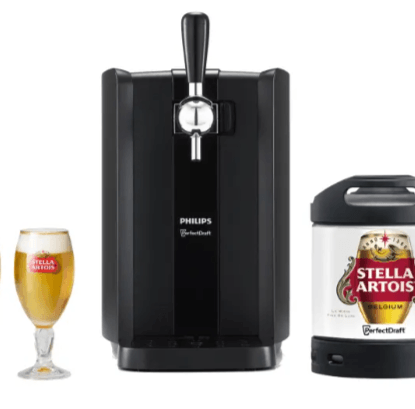
Many PerfectDraft users wonder whether the system eliminates freezing risks entirely. While PerfectDraft machines are designed to maintain beer at an ideal serving temperature, they are still influenced by their environment. So, can beer kegs freeze inside a PerfectDraft system? Under normal conditions, no—but in extremely cold surroundings, it becomes possible.
PerfectDraft systems typically keep beer between 3°C and 4°C (37–39°F), which is safely above freezing. However, if the machine is placed in a very cold room, garage, or near freezing air, the internal temperature may drop below the intended range. These machines regulate cooling but do not generate heat, so ambient conditions matter.
To reduce the risk:
- Place the machine in a temperature-controlled indoor space
- Avoid exposure to cold drafts or unheated environments
- Ensure proper airflow around the unit
- Check temperature settings regularly
Keeping your PerfectDraft system in a stable indoor environment is the simplest way to prevent freezing issues.
It’s also worth noting that colder is not always better. Beer served too cold loses aroma and complexity. Maintaining the correct temperature not only prevents freezing but also ensures the best possible flavor and texture in every pour.
Find many answers to theses questions ! Are beer kegs in aluminum ?, Are beer kegs in aluminum or stainless ? Are beer kegs made of aluminum ?, Are beer kegs pressurized ?, Are beer kegs stainless steel ? and Are beer kegs stainless steel or aluminum ?